Physical Address
Lahore, Punjab, Pakistan
Physical Address
Lahore, Punjab, Pakistan

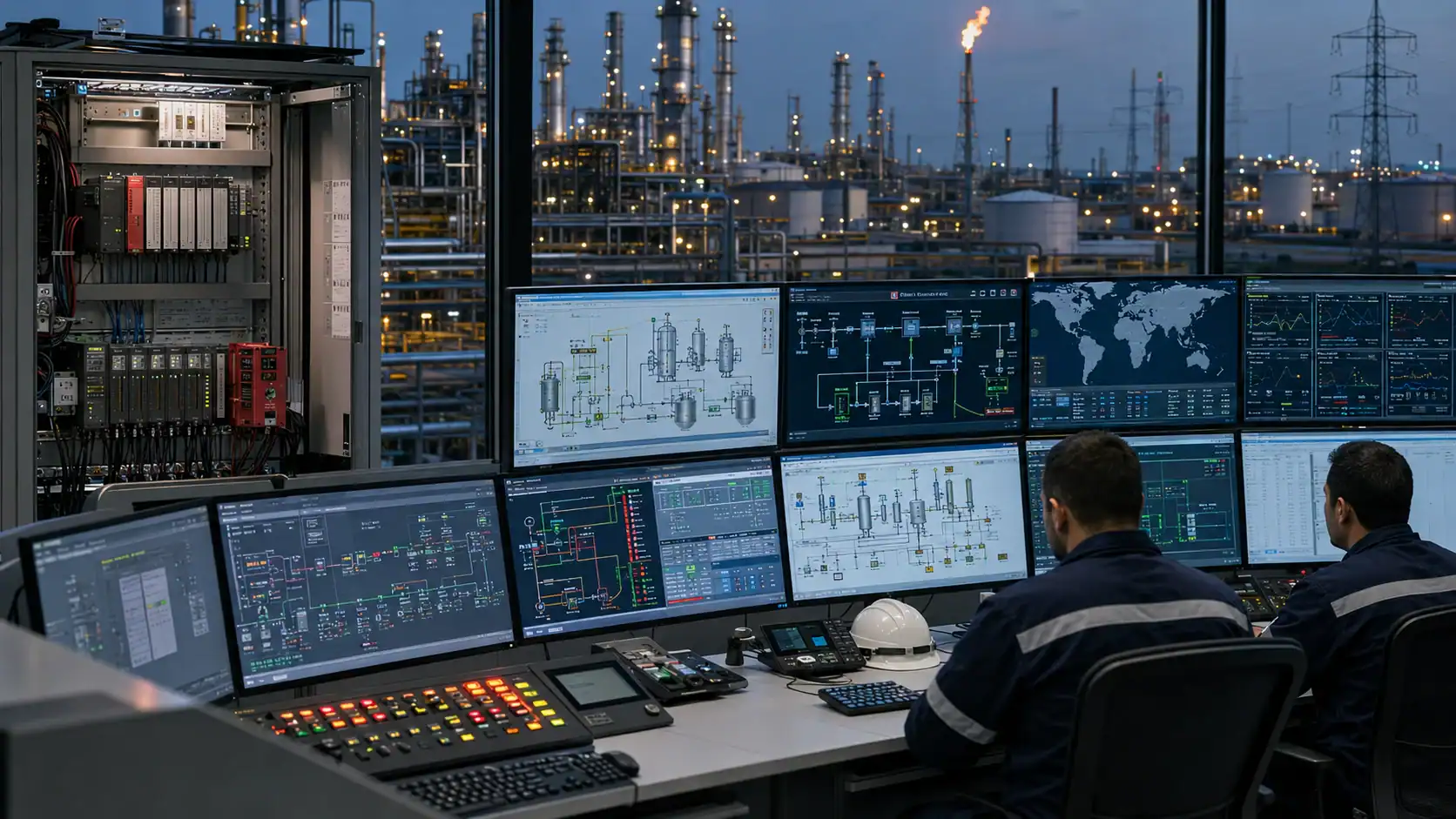
Modern petrochemical plants depend on industrial control systems for safe and efficient operation. As these systems become more connected and integrated with IT networks, cybersecurity has evolved from an IT concern into a core engineering discipline. This article examines the cybersecurity challenges facing DCS and SCADA systems in petrochemical environments, explains the IEC 62443 framework and zone-conduit model, and provides practical engineering guidance for network segmentation, device hardening, patch management, and incident response.
Petrochemical plants rely on industrial control systems to manage complex chemical processes safely and efficiently. These systems include distributed control systems, safety instrumented systems, programmable logic controllers, and supervisory control and data acquisition systems. Historically, many plants operated control networks as isolated islands with minimal external connectivity. Today, digital transformation has changed that. Modern plants integrate operational technology networks with enterprise IT systems for data analytics, remote monitoring, and predictive maintenance. This integration introduces new cybersecurity risks that were not present in traditional control environments.
Cybersecurity in industrial control systems is no longer an IT-only responsibility. It has become a core engineering discipline. Electrical engineers, instrumentation engineers, automation engineers, and plant operators must understand how cyber threats can affect process safety, equipment reliability, and plant availability. The consequences of a successful cyberattack can include production losses, equipment damage, environmental releases, and, in extreme cases, harm to personnel. For this reason, cybersecurity must be designed into control systems from the earliest stages of project development, not added as an afterthought after commissioning.
This article examines the cybersecurity challenges facing modern petrochemical control systems. It explains how DCS and SCADA architectures work, where vulnerabilities arise, and how international standards such as IEC 62443 provide a framework for secure design. The discussion includes practical engineering recommendations, examples from real incidents, and guidance on implementing network segmentation, hardening field devices, and managing patches in continuous operations. The target audience includes electrical, instrumentation, and automation engineers; OT cybersecurity specialists; EPC consultants; plant engineers; engineering managers; and engineering students.
Distributed control systems are the backbone of process automation in petrochemical plants. A typical DCS consists of controllers distributed throughout the plant, connected via industrial networks to field instruments, motor control centers, and operator workstations. Controllers execute regulatory control loops for temperature, pressure, flow, and level. They also handle sequence logic, batch operations, and advanced process control strategies.
DCS architectures are designed for high availability and deterministic performance. Redundant controllers, redundant networks, and hot standby power supplies are common. Engineering stations are used to configure control logic, graphics, and alarm management. Historians collect process data for performance monitoring and optimization. In many plants, the DCS also interfaces with safety instrumented systems, fire and gas systems, and plant information management systems.
From a cybersecurity perspective, DCS systems present several challenges. Engineering workstations often have elevated privileges and direct access to controllers. Historians and asset management systems may be connected to both OT and IT networks. Legacy controllers may lack secure boot, firmware validation, or strong authentication mechanisms. These factors increase the attack surface and make DCS systems attractive targets for adversaries.
Supervisory control and data acquisition systems are used to monitor and control geographically dispersed assets. In petrochemical applications, SCADA is commonly used for pipeline operations, tank farms, offshore platforms, and remote well sites. SCADA systems collect data from remote terminal units and programmable logic controllers, display information to operators, and support remote control actions.
SCADA architectures typically include a central control room with servers, operator workstations, and communication infrastructure. Field sites use RTUs or PLCs connected via radio, satellite, leased lines, or cellular networks. SCADA systems emphasize data acquisition, alarm management, and reporting. They may integrate with DCS systems at larger facilities for unified operations.
Cybersecurity risks in SCADA environments arise from remote connectivity, legacy protocols, and limited bandwidth. Remote sites may have intermittent connectivity, making patch deployment and monitoring difficult. Communication links can be intercepted or disrupted. Many SCADA protocols were designed decades ago with minimal security features, relying on physical isolation for protection. As these systems become more connected, they require stronger security controls.
| Element | DCS | SCADA |
|---|---|---|
| Primary Application | Continuous process control in refineries, chemical plants, LNG facilities | Monitoring and control of geographically dispersed assets (pipelines, tank farms, remote sites) |
| Architecture | Tightly integrated controllers, I/O, and operator stations; often vendor-specific | Centralized master station with remote RTUs/PLCs; more heterogeneous |
| Network Topology | Plant-wide industrial Ethernet with redundancy; deterministic performance | Wide area networks with varied media (radio, fiber, cellular); higher latency |
| Control Philosophy | Regulatory control, advanced process control, batch sequencing | Supervisory control, data acquisition, alarm management |
| Security Focus | High availability, controller hardening, engineering station protection | Remote access security, communication link protection, protocol security |
| Typical Standards | IEC 61511 (SIS integration), ISA-84, vendor-specific DCS standards | ISA-95, ISA-99, pipeline-specific standards (e.g., API 1164) |
DCS and SCADA systems serve different operational needs, but both are critical to petrochemical operations. Understanding their technical differences helps engineers design appropriate cybersecurity measures. For example, DCS security often focuses on controller integrity and network segmentation within the plant. SCADA security emphasizes securing remote communications and protecting central servers from external attacks.
IT-OT convergence refers to the integration of information technology systems with operational technology networks. In petrochemical plants, this integration enables real-time data sharing between control systems and enterprise applications. Benefits include improved operational visibility, predictive maintenance, energy management, and centralized reporting.
However, convergence also introduces new cyber risks. Historically, OT networks were air-gapped or loosely connected to IT networks. Today, firewalls, data diodes, and DMZ networks are used to control traffic between zones. Despite these controls, misconfigurations, weak access controls, and unmonitored connections can allow threats to propagate from IT to OT.
Common convergence-related risks include:
Engineers must design converged architectures with clear boundaries, strict access controls, and continuous monitoring. The Purdue Enterprise Reference Architecture and IEC 62443 zone-conduit model provide useful frameworks for this purpose.
Unauthorized remote access is a significant threat to petrochemical control systems. Attackers may exploit weak VPN configurations, unpatched remote access servers, or compromised third-party connections. Once inside the OT network, they can move laterally to critical controllers and field devices.
Firmware vulnerabilities in PLCs, DCS controllers, and intelligent electronic devices are another concern. Many devices run embedded operating systems with known vulnerabilities. Attackers can exploit these flaws to modify logic, disable safety functions, or cause equipment malfunctions. Firmware updates are often difficult to apply in continuous operations, leaving devices exposed for extended periods.
Engineering workstation compromise is a high-impact attack vector. Engineering stations typically have full access to control logic, configuration files, and network settings. If compromised, an attacker can upload malicious logic, change setpoints, or disable alarms. Strong access controls, application whitelisting, and regular audits are essential to protect these assets.
Rogue devices pose a risk when unauthorized equipment is connected to the OT network. This can include unauthorized wireless access points, personal laptops, or field devices added without proper change management. Rogue devices can introduce malware or create backdoors for future attacks.
USB-based malware remains a persistent threat in industrial environments. Operators and maintenance personnel may use USB drives to transfer configuration files, firmware updates, or logs. If these drives are infected, malware can spread to control systems even in networks with limited external connectivity.
Supply chain risks involve compromised hardware or software delivered by vendors. Attackers may tamper with devices during manufacturing or distribution, or include malicious code in software updates. Organizations should implement supply chain security practices, such as verifying firmware signatures, auditing vendor security practices, and testing updates in a non-production environment.
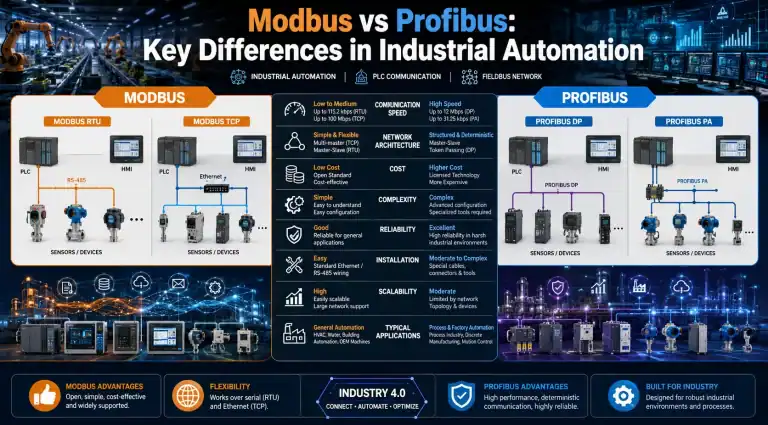
Industrial protocols such as Modbus TCP, PROFINET, OPC UA, and EtherNet/IP are widely used in petrochemical plants. Many of these protocols were designed for reliability and simplicity, not security. As a result, they may lack authentication, encryption, or integrity checks.
Modbus TCP is a simple, widely deployed protocol. It transmits data in clear text and does not include authentication mechanisms. Attackers can easily spoof Modbus messages to change setpoints or read sensitive process data. Network segmentation and access control lists can help mitigate these risks.
PROFINET is commonly used in automation networks. While it offers real-time performance, early implementations had limited security features. Modern PROFINET devices support security extensions, but legacy equipment may not. Engineers should evaluate device capabilities and consider additional network protections.
OPC UA provides a more secure foundation with support for encryption, authentication, and certificate-based security. However, misconfigurations or weak certificate management can undermine its security benefits. Proper configuration and regular audits are necessary to ensure OPC UA implementations are secure.
EtherNet/IP is used in many industrial applications. Like other CIP-based protocols, it was not originally designed with strong security. Organizations should implement network segmentation, monitor for anomalous traffic, and consider protocol-aware firewalls to protect EtherNet/IP networks.
The Shamoon attack against Saudi Aramco in 2012 demonstrated the potential impact of cyber attacks on industrial organizations. While the primary target was IT infrastructure, the incident disrupted business operations and highlighted the interdependence of IT and OT systems. Attackers used malware to overwrite data on thousands of workstations, causing significant operational disruption.
Key lessons for engineers include the importance of backup and recovery strategies, network segmentation, and incident response planning. Although control systems were not directly compromised, the incident showed that attacks on supporting IT infrastructure can affect plant operations. Organizations should ensure that critical OT systems can operate independently if IT systems are unavailable.
The Triton malware, also known as Trisis, targeted safety instrumented systems in an industrial facility. Attackers gained access to the OT network and deployed malware designed to interfere with SIS controllers. The malware attempted to modify safety logic, potentially disabling critical safety functions.
This incident underscores the need to protect safety systems as high-value assets. SIS controllers should be isolated from general control networks, with strict access controls and monitoring. Security measures for SIS should align with functional safety standards such as IEC 61511, which emphasizes the independence and reliability of safety functions.
Real-world attacks show that adversaries are capable of targeting industrial control systems directly. Engineers should assume that OT networks will be targeted and design defenses accordingly. Key takeaways include:
IEC 62443 is a series of standards that address cybersecurity for industrial automation and control systems. It provides a framework for securing ICS across their lifecycle, from design and implementation to operation and maintenance. The standard is organized into multiple parts, covering general concepts, system requirements, component requirements, and process requirements.
IEC 62443 emphasizes a risk-based approach. Organizations should identify assets, assess threats and vulnerabilities, and determine the required security level for each zone. The standard also defines roles and responsibilities, including those of asset owners, system integrators, and component suppliers.
For petrochemical plants, IEC 62443 provides practical guidance on network segmentation, access control, patch management, and incident response. It complements process safety standards such as IEC 61511 by addressing cybersecurity risks that could impact safety functions.
The zone and conduit model is a key concept in IEC 62443. Zones are logical groupings of assets that share common security requirements. Conduits are communication paths between zones. By grouping assets into zones and controlling traffic through conduits, engineers can limit the impact of a security breach.
In a petrochemical plant, typical zones might include:
Conduits between zones should be protected with firewalls, intrusion detection systems, and access controls. Traffic should be minimized and monitored. The zone-conduit model helps engineers design architectures that align with the Purdue model and provide clear boundaries for security controls.
IEC 62443 defines security levels from SL-1 to SL-4. SL-1 represents basic protection against casual or coincidental attacks. SL-4 represents protection against sophisticated adversaries with significant resources. Most petrochemical plants target SL-2 or SL-3, depending on risk assessments.
Security levels are assigned to zones based on the consequences of a security breach. For example, a safety systems zone may require a higher security level than a general control zone. Engineers should document the rationale for each security level and ensure that controls are implemented accordingly.
Secure architecture design involves applying IEC 62443 principles to petrochemical control systems. Key considerations include:
Architecture reviews should be conducted during project design and periodically throughout the lifecycle. Changes to network topology or system configurations should be evaluated for security impact.
The Purdue Enterprise Reference Architecture provides a layered model for industrial control systems. Levels 0 to 3 represent OT systems, while levels 4 and 5 represent IT systems. Segmentation between these levels helps contain threats and limit lateral movement.
In practice, engineers should:
Network segmentation should be documented and reviewed regularly. Changes should follow a formal change management process to avoid unintended security gaps.
Hardening field devices and controllers reduces the attack surface. Best practices include:
For safety instrumented systems, hardening should not compromise functional safety. Changes to SIS configurations must follow safety lifecycle procedures as defined in IEC 61511.
Remote vendor access is common in petrochemical plants for support and maintenance. However, it introduces risks if not properly controlled. Secure remote access practices include:
Vendor access should be treated as a high-risk activity. Contracts should include cybersecurity requirements and incident reporting obligations.
Patch management is challenging in continuous operations. Plants cannot easily shut down for updates. A structured approach includes:
Vulnerability management should be integrated with risk assessments. High-severity vulnerabilities affecting critical systems should be prioritized.
Smart field devices and variable frequency drives are increasingly connected to control networks. These devices may support configuration via network interfaces, making them potential targets. Protection measures include:
Engineers should evaluate the cybersecurity features of field devices during procurement and specify requirements in technical specifications.
Machine learning can enhance anomaly detection in OT networks. By analyzing network traffic, process data, and device behavior, ML algorithms can identify deviations from normal operation. This can help detect attacks that evade traditional signature-based defenses.
However, ML systems require careful tuning and validation. False positives can disrupt operations if not managed properly. Engineers should work with cybersecurity specialists to design ML-based monitoring that aligns with operational requirements.
Deep packet inspection involves analyzing network traffic at a detailed level to identify malicious activity. DPI tools can detect protocol violations, unusual command sequences, and unauthorized access attempts. When combined with knowledge of industrial protocols, DPI can provide strong visibility into OT network security.
Deployment considerations include performance impact, especially on real-time networks. Engineers should evaluate DPI solutions in lab environments before deploying them in production.
OT security information and event management systems collect and correlate logs from control systems, network devices, and security appliances. They provide a centralized view of security events and support incident response.
Automated incident response can help contain threats quickly. For example, automated actions might include blocking suspicious IP addresses, isolating compromised devices, or triggering alerts to operations staff. Automation should be designed carefully to avoid unintended consequences in critical processes.
Cybersecurity is not only a technical issue; it also involves people and processes. Operations and maintenance teams play a key role in protecting control systems. Training should cover topics such as:
Security-by-design should be embedded in project execution. Cybersecurity requirements should be included in front-end engineering design, detailed engineering, and commissioning. EPC contractors should demonstrate compliance with relevant standards and best practices.
Regular drills and tabletop exercises can improve incident response readiness. These exercises should involve operations, maintenance, IT, and management teams to ensure coordinated responses.
Cybersecurity is an essential aspect of modern petrochemical control systems. As plants become more connected and automated, the risk of cyber attacks increases. Engineers must understand the unique characteristics of DCS and SCADA systems, the threats they face, and the standards that guide secure design.
IEC 62443 provides a robust framework for industrial cybersecurity, emphasizing risk-based approaches, zone-conduit models, and security levels. Practical measures such as network segmentation, device hardening, secure remote access, and patch management are critical for protecting petrochemical plants.
Real-world incidents like Shamoon and Triton highlight the potential consequences of cyber attacks. These events reinforce the need for defense-in-depth strategies, isolation of safety systems, and strong incident response capabilities.
Looking ahead, technologies such as machine learning and deep packet inspection offer new ways to enhance OT security. However, technology alone is not sufficient. A strong cybersecurity culture, supported by training, processes, and leadership commitment, is necessary to protect critical infrastructure.
Cybersecurity must be considered during plant design, not after commissioning. By integrating security into every stage of the project lifecycle, engineers can build resilient control systems that support safe, reliable, and efficient operations.
Q: What is the main difference between DCS and SCADA from a cybersecurity perspective?
A: DCS focuses on continuous process control within a plant, with tight integration and high availability requirements. Cybersecurity for DCS often emphasizes controller hardening and internal network segmentation. SCADA deals with geographically dispersed assets and remote communications, so security focuses more on securing wide area networks, remote access, and protocol security.
Q: How does IEC 62443 relate to functional safety standards like IEC 61511?
A: IEC 61511 addresses functional safety for safety instrumented systems, ensuring they perform correctly under specified conditions. IEC 62443 addresses cybersecurity risks that could compromise the availability, integrity, or confidentiality of control systems, including safety systems. Both standards should be applied together to protect safety functions from cyber threats.
Q: What is the zone-conduit model in IEC 62443?
A: The zone-conduit model groups assets into zones based on similar security requirements. Conduits are controlled communication paths between zones. This model helps engineers design segmented architectures that limit the spread of cyber attacks and align with the Purdue Enterprise Reference Architecture.
Q: How can patches be applied in 24/7 petrochemical operations?
A: Patches should be tested in a non-production environment first. Deployment can be scheduled during planned outages, turnarounds, or low-risk periods. If immediate patching is not possible, compensating controls such as network segmentation, access restrictions, and increased monitoring should be implemented.
Q: What are the key lessons from the Triton malware incident?
A: Triton targeted safety instrumented systems, showing that adversaries can directly attack safety functions. Key lessons include the need to isolate SIS networks, implement strict access controls, monitor SIS communications, and align cybersecurity measures with functional safety requirements.